
Scientific Name(s): Solanum nigrum, Solanum ptychanthum, Solanum americanum
Other names: none
Abundance: plentiful
What: young leaves raw, mature leaves cooked, ripe berries raw
How: berries raw, leaves cooked
When: summer, early fall
Where: yards, fields
Nutritional Value: assorted vitamins, minerals
Dangers: small amounts of toxic alkaloid solanine can be found in green, unripe berries and even smaller amounts in mature leaves. Ripe berries can be eaten raw, leaves should be cooked.
On this page: Identification · Range & Ecosystem · Uses · Dangers · Harvest Time · Possible Mimics

Identification
Identification Features
- Leaf Arrangement: The leaves are arranged alternately along the stems.
- Leaf Shape: The leaves are typically ovate to rhombic, with a length ranging from 1 to 3 inches and a width of 1 to 2 inches.
- Leaf Venation: The venation is pinnate.
- Leaf Margin: The leaf margin is typically entire, with occasional irregularities.
- Leaf Color: The leaves are green, darker green on the top with a lighter underside.
- Flower Structure: The flowers are small, star-shaped with 5 backwards-pointing petals, with a diameter of approximately 1/4 inch, and are usually found in clusters.
- Flower Color: Black nightshade flowers are white with a yellow center.
- Fruit: The fruit is a berry, initially green with tiny, white dots and turning black when mature, with a smooth surface.
- Seed: Seeds are small, disc-shaped, and numerous within the berry.
- Stem: Black nightshade stems are square, green and branching.
- Hairs: Leaves and stem have fine, somewhat coarse hairs.
- Height: Black nightshade typically grows to a height of 1 to 3 feet, but it can vary depending on growing conditions.
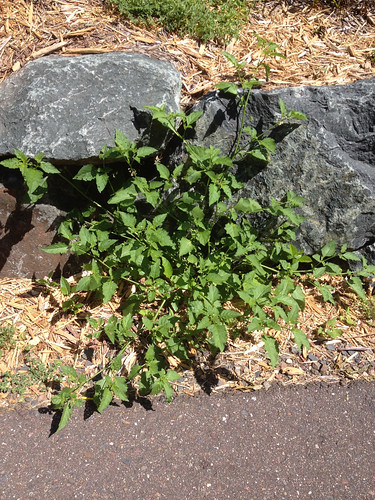 |
| Full black nightshade plant |
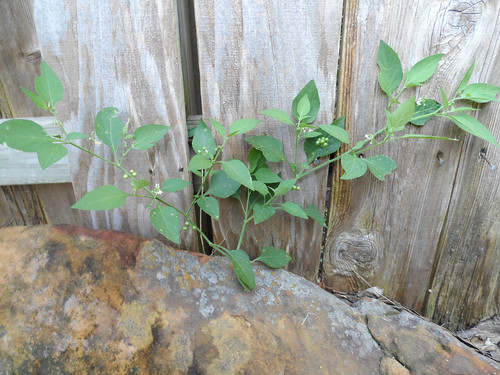 |
| Young black nightshade |
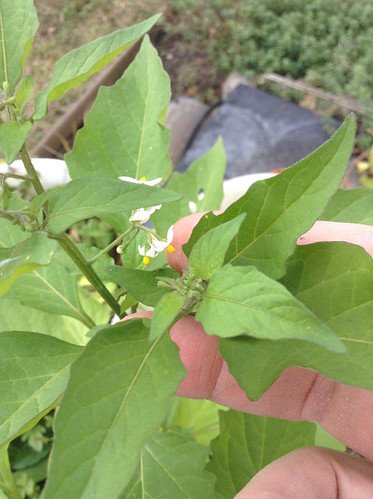 |
| Black Nightshade flowers. Note the backwards-pointing petals. |
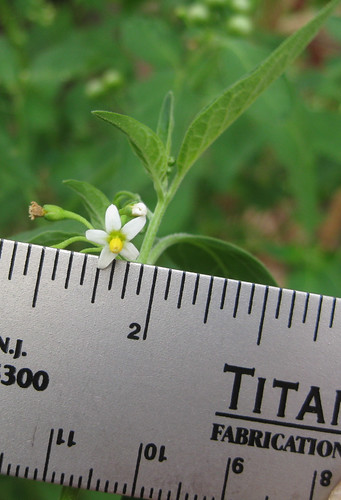 |
| Close-up of black nightshade (Solanum ptychanthum) flower (white petals, yellow center). |
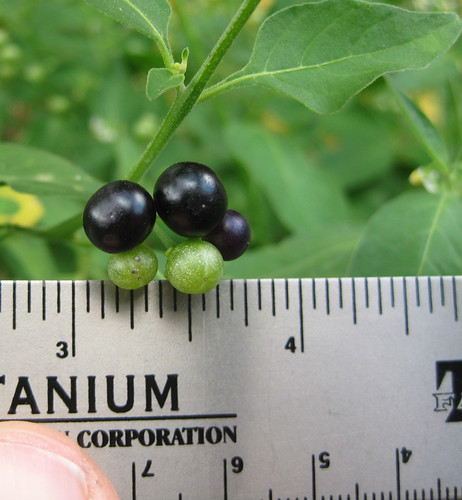 |
| Closeup of black nightshade (Solanum ptychanthum) fruit. Ripe fruit is black, unripe fruit is speckled green. |
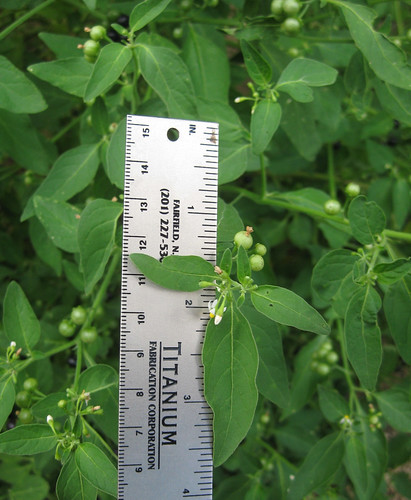 |
| Black nightshade (Solanum ptychanthum) leaves. |
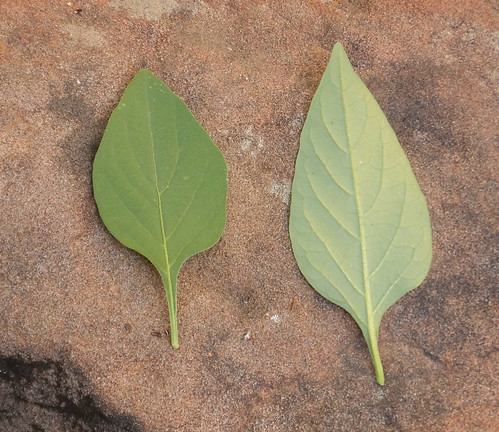 |
| Front (left) and Back (right) of leaves |
Range & Ecosystem
Range
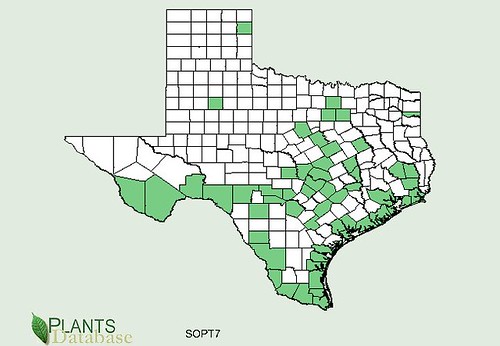 |
| Texas distribution, attributed to U. S. Department of Agriculture. The marked counties are guidelines only. Plants may appear in other counties, especially if used in landscaping. |
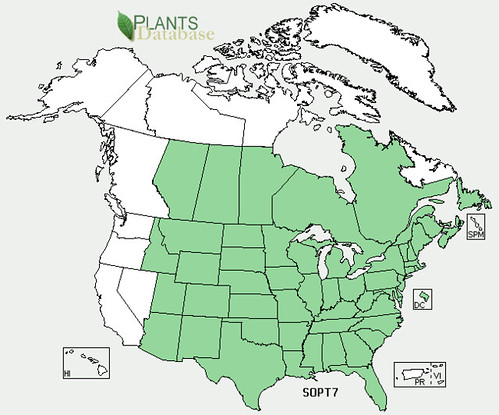 |
| North American distribution, attributed to U. S. Department of Agriculture. |
Ecosystem
yards, fields
Uses
Food
What: young leaves raw, mature leaves cooked, ripe berries raw
How: berries raw, leaves cooked
Nutritional Value: assorted vitamins, minerals
Spring up uninvited just about anywhere some bare, fertile soil waits, black nightshades with its tiny white flowers, clusters of black berries, and small leaves can grow 3’ to 4’ tall and just as wide between spring and the first frost of winter.
The leaves are lanceolate or elliptic in shape with smooth edges. Looking closely at the flowers, the petals are revealed to be folded backwards, an indication you are looking at the mellow-flavored Solanum ptychanthum aka American nightshade. The berries of this plant start out green with white spots but quickly turn black and edible. Birds love these berries which is why the plant quickly gets spread far and wide via bird poop. You'll find flowers, unripe berries, and ripe berries all at the same time on a single plants as it continuously produces its tiny fruit all summer long.
The main edible portion of Solanum ptychanthum are its leaves which I love cooked in curry sauce then poured over chicken and rice. Time spent with the amazing forager, Sam Thayer, revealed the young, tender leaves are a fine, raw addition to salads. That being said, it's still safest to cook the leaves, especially if you aren't used to eating lots of wild plants.
Medicine
none
Harvesting Tips
Young leaves should be snipped off plant with a scissors or pruning shears, not torn off the plant. Black berries can be eaten raw but don't eat the green berries.
Dangers
Harvest Time
When: summer, early fall
Possible Mimics
The very similar-looking Solanum nigrum is one of the most popular vegetables of Asia and Southern Europe yet here in North America, where it has naturalized, it is lumped in with its much more poisonous family members such as belladonna.
Learn this plant in person: Upcoming classes
