Abundance: plentiful
What: fruits, leaves, young tendrils
How: fruit raw (very tart), cooked, dried, preserves, wine; leaves and tendrils cooked,
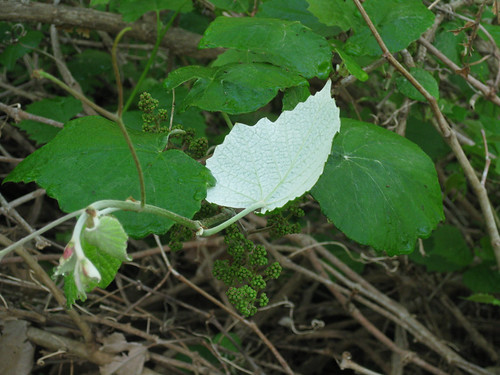
Where: Edges of woods. Mustang grape leaves are fuzzy and have a white underside.
When: summer
Nutritional Value: calories, antioxidants
Other uses: water can be obtained from the vines (see technique in grapes- muscadine post), wild yeast from the fruit
Dangers: Mustang grapes are very acidic and handling/eating large amounts of the raw fruit can cause burns to hands and mouth.
Leaf Arrangement: The leaves of Vitis mustangensis are arranged alternately along the stem.
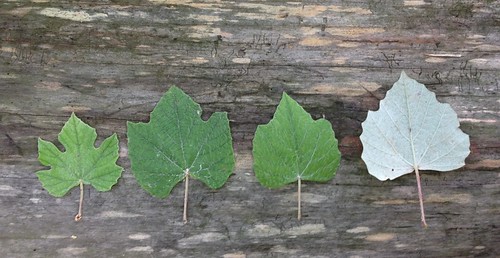
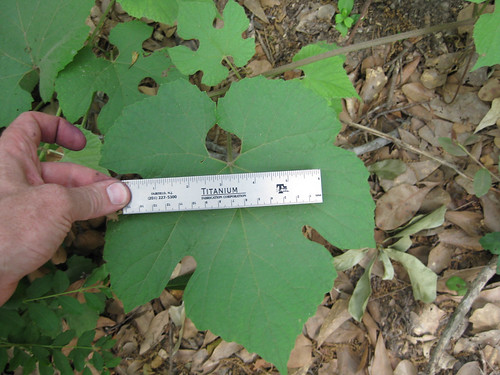
Leaf Shape: Leaves of young vines are typically simple, palmately lobed with three to five lobes, each lobe being ovate, measuring approximately 2 to 5 inches in width. Leaves of mature vines lack the deep lobes.
Leaf Venation: Palmate venation, with veins running from the leaf base out to the tip of each leaf lobe.
Leaf Margin: The leaf margin is typically serrated or toothed.
Leaf Color: Tops of leaves are green while undersides are light gray.
Flower Structure: The flowers are small and greenish, occurring in clusters known as inflorescences. Each individual flower is 1/8" in diameter or smaller
Flower Color: Flowers are typically greenish-yellow.
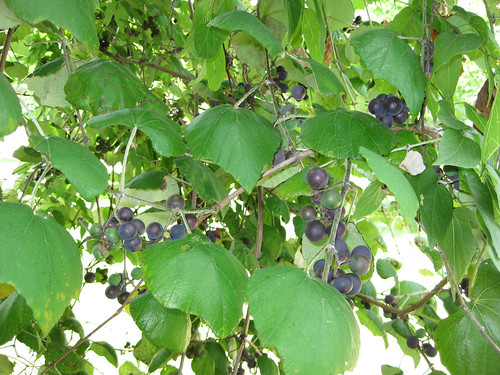
Fruit: The fruit is a grape, often larger than most grape species, with a diameter ranging from approximately 1/2 to 1 inch, and usually dark purple to black when ripe. The fruit grow on long, clusters, just like store-bought grapes.
Seed: Inside the grape are small, round, and brown seeds.
Stem: The stem is typically climbing, with tendrils for support. Bases of mature mustang grape vines can be over 4" in diameter.
Hairs: Fine hairs are present on the leaves, especially the leaf underside, and on the stems.
Height: Vitis mustangensis is a climbing vine and can reach varying heights depending on its support structure.
Mustang grape vine with unripe fruit. Note that the top of the leaves are green while their underside is white/gray. Both sides of the leaf are fuzzy to the touch.
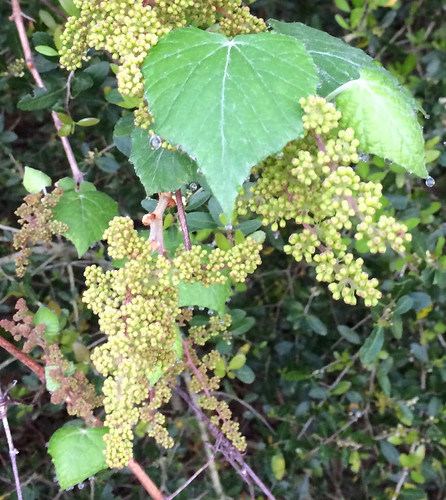
Almost-ripe Mustang grapes.
The leaves of young mustang grape vines are more deeply lobed (left) than the leaves of mature vines (right).
The lobed leaves can get quite large, depending on growing conditions.
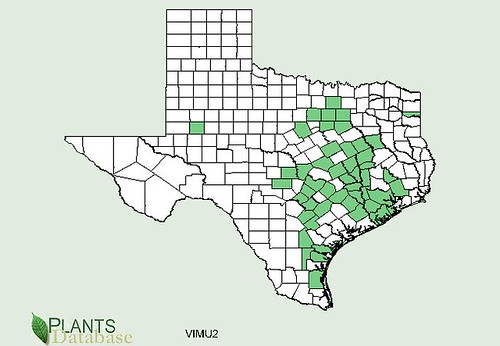
Texas distribution, attributed to U. S. Department of Agriculture. The marked counties are guidelines only. Plants may appear in other counties, especially if used in landscaping.
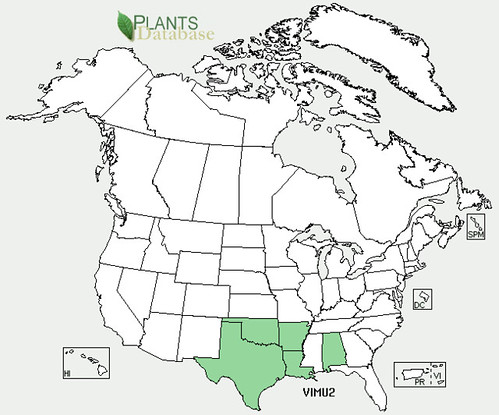
North American distribution, attributed to U. S. Department of Agriculture.
Mustang grapes are easy to tell apart by their leaves from other wild grapes. The topside are dark green and smooth while the undersides are gray and fuzzy like the nose of a horse. These grapes are the first to ripen in the summer here in Texas. Their skins are thick and tough, surrounding a very tart, gelatinous interior containing several small seeds. This acidic tartness of the mustang grape skins makes them unpleasant to eat raw and can result in acid burns on your mouth and fingers. However, this acid gives them a complex flavor when made into jam/jelly or wine. When making jelly include some skins of green/unripe grapes as a source of pectin.
I love this book for wine-making recipes: 101 Recipes for Making Wild Wines
Due to their fuzziness, the leaves less commonly used in grape leaf recipes, but there's no flavor or other reason not to use them.
Mustang grapes seem to prefer climbing along fences, old farm equipment, and other abandoned works of mankind in sunny fields.
Buy my book! Outdoor Adventure Guides Foraging covers 70 of North America's tastiest and easy to find wild edibles shown with the same big pictures as here on the Foraging Texas website.