Other names: none
Abundance: common
What: roots
How: medicinal
Medicinal parts: Root, whole plant
When: winter, spring
Where: yards, fields
Nutritional Value: none (not edible)
Dangers: Carolina geraniums are considered edible but are only used externally medicinally in wounds and gargles, do not swallow.
On this page: Identification · Range & Ecosystem · Uses · Dangers · Harvest Time · Possible Mimics
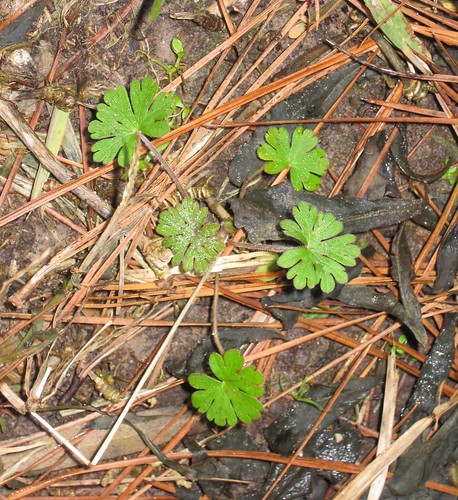 |
| Carolina geranium seedling in December. |
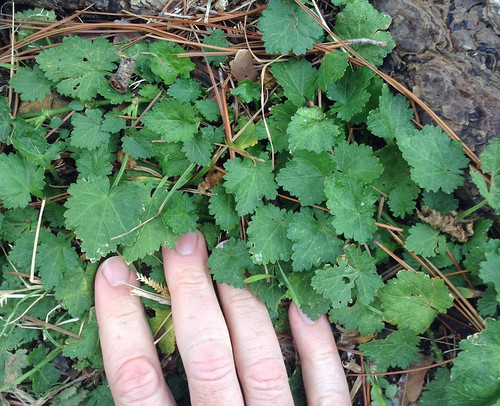
Many a yard, flowerbed and garden see this low, creeping weed show up in the Texas "winter". Left unpacked, it'll turn into a leggy, small bush around one foot tall and two feet across. The leaves are deeply lobed with rounded, toothed edges. Stems are hairy. The pink flowers eventually turn into a long, pointed seedpod thingy.
Identification
Identification Features
- Leaf Arrangement: The leaves of Geranium carolinianum are arranged in a basal rosette. This means the leaves primarily grow at the base of the plant, close to the ground.
- Leaf Shape: The leaves are deeply lobed, giving them a somewhat cut or dissected appearance. Each leaf typically has 5 to 7 lobes.
- Leaf Venation: The venation is palmate, meaning the veins radiate outward from a single point like the fingers on a hand.
- Leaf Margin: The margins of the leaves are crenate, meaning they have rounded teeth.
- Leaf Color: The leaves are generally green, but they may have a hint of red or purple, especially in cooler temperatures.
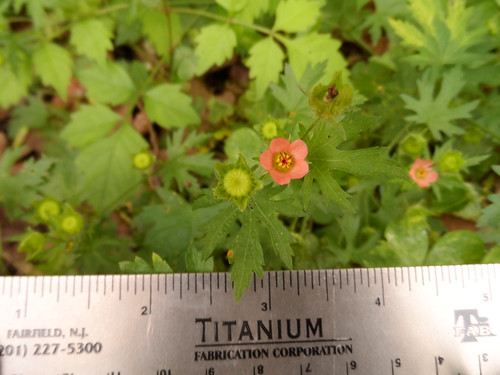
- Flower Structure: The flowers have five petals and are arranged in loose clusters. Each petal has a small, rounded notch at the tip. Individual flowers are about 1/5" across.
- Flower Color: The flowers are usually light purple to pink, sometimes with darker veins.
- Fruit: The fruit is a beaked capsule, which when mature, splits open to release seeds. The 'beak' of the capsule resembles a crane's bill, hence the common name 'Cranesbill.'
- Seed: The seeds are small, oblong, and generally have a reticulated surface.
- Stem: The stems are erect to ascending, and can be hairy. They are typically green, but like the leaves, may have reddish to purplish tinges.
- Hairs: The stems and sometimes the leaves are covered in small hairs, which can give the plant a slightly fuzzy appearance.
- Height: This plant usually grows to a height of about 10 to 18 inches.
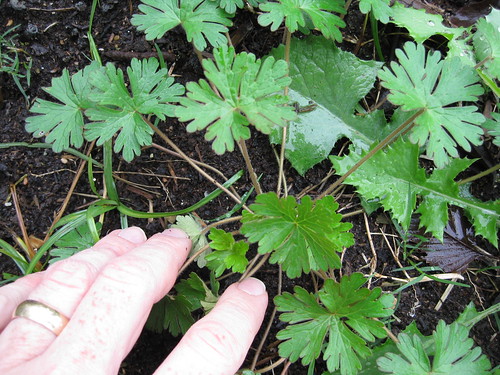 |
| Getting bigger. Note the lobed leaves with rounded teeth, and how the stems are hairy. |
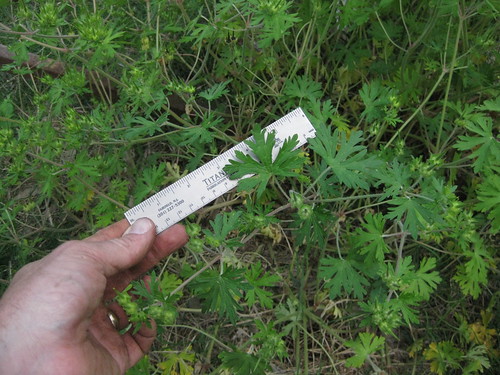 |
| Mature Carolina geraniums can spread over 24 inches across. |
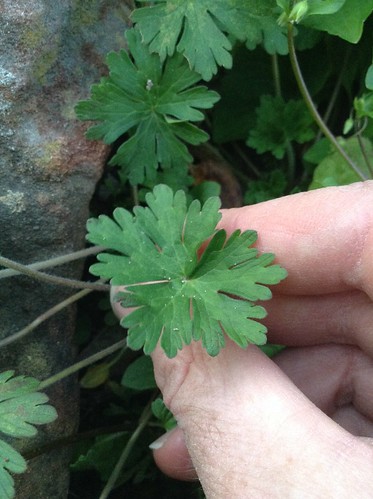 |
| Close-up of leaves. |
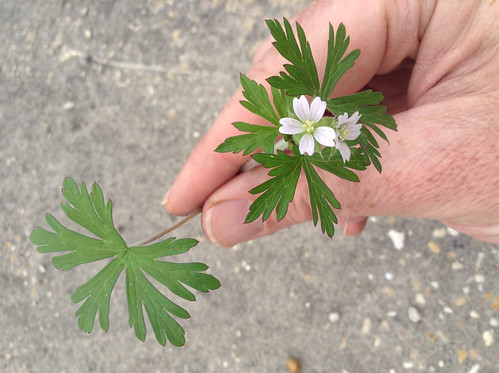 |
| Carolina geranium flowers have five petals, each with a rounded notch at the tip. |
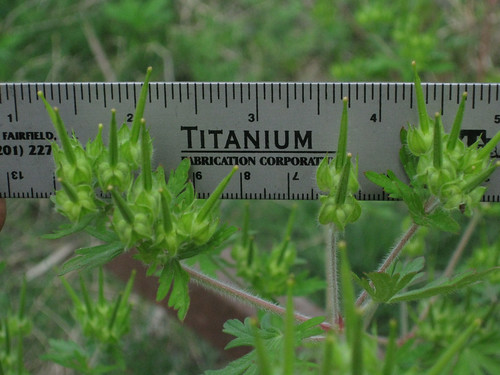 |
| Close-up of Carolina geranium seed pods. |
Range & Ecosystem
Range
 |
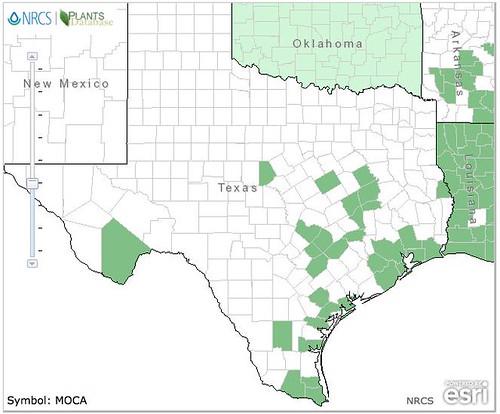
| Texas distribution, attributed to U. S. Department of Agriculture. The marked counties are guidelines only. Plants may appear in other counties, especially if used in landscaping. |
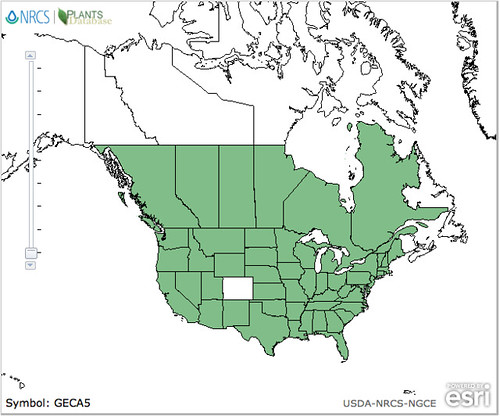 |
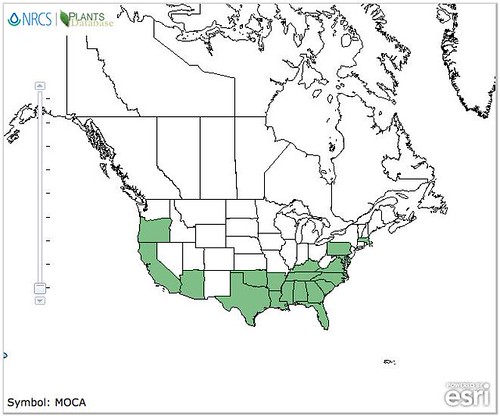
| North American distribution, attributed to U. S. Department of Agriculture. |
Ecosystem
yards, fields
Uses
Food
What: roots
How: medicinal
Nutritional Value: none (not edible)
You can use it fresh if you chop it up really finely then boil 1-2 teaspoons full in 1 cup water for ten minutes. My lawyer says I need to remind people to let this solution cool before using. Native Americans would dry the root, grind it into a fine powder, then sprinkle this powder into wounds to stop bleeding. Personally, I've never tried this powdered root method but hey, it might be good to know when the zombies come.
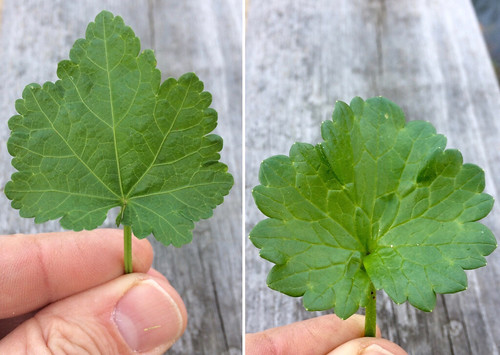
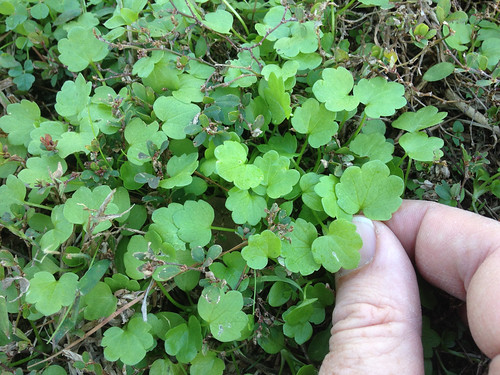
You can see the leaves of the creeping buttercup are much less deeply lobed, shinier, and smoother. The stems are smooth and the entire plant hugs the ground more closely than Carolina geraniums. Creeping buttercups contain a chemical that, when consumed, makes mammals hypersensitive to sunlight. Skin hit by sunlight almost immediately starts to blister...basically, creeping buttercups turn you into a redhead!
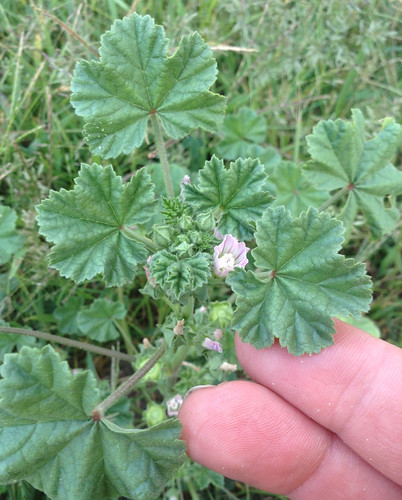
Carolina bristle mallow has very coarse leaves and stems. It creeps along the ground and puts down roots wherever the stem touches the ground. It is used to make a cooling tea.
 |
| Edible Carolina Bristle Mallow (Modiola caroliniana). |
Medicine
Root - astringent; antibacterial; anti-fungal; soothes sore throat/mouth; anti-diarrheal (poultice, powder, tisane)
Whole plant - pain reliever, fever reducer, anti-inflammatory (tisane, tincture)
The plant grows outwards from a single taproot and that taproot is the medicinal part that you'll want.
The root of Carolina geranium is very astringent which makes it excellent for stopping bleeding. Astringent compounds cause capillaries to constrict, thereby shutting down minor bleeding. If you're spraying arterial blood or have a deep slash through several medium-to-large veins you're out of luck. Think nosebleed level of bleeding or smaller. Dry/dehydrate the plant, grind it into powder, then keep stored in an airtight container. Apply this power to a cut/slash to control bleeding.
These astringent molecules will also give some relief to a sore throat if gargled but don't swallow the decoction made from the root. After a minute of swishing/gargling spit it out. To use this root as a gargle/mouthwash, simply pull it out of the ground and rub/rip away the small, side roots from the main taproot.
Harvesting Tips
The bigger the aboveground plant the bigger this root so put off harvesting it as long as possible.
Dangers
Harvest Time
When: winter, spring
Possible Mimics
Two mimics of this plant are the poisonous Creeping Buttercup (Ranunculus repens) and edible Carolina Bristle Mallow (Modiola caroliniana).
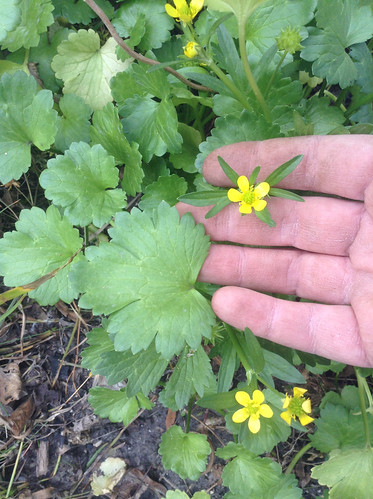 |
| Poisonous mimic Creeping Buttercup (Ranunculus repens). |
Learn this plant in person: Upcoming classes