Abundance: plentiful
What: nuts
How: raw, cooked
Where: pecan trees
When: fall
Nutritional Value: carbohydrates and protein
Leaf Arrangement: Alternate arrangement of compound leaves.
Leaf Shape: Odd-pinnate compound leaves with typically 9 to 17 leaflets.
Leaf Size: Individual leaflets are usually 2 to 6 inches in length, depending on location along the petile.
Leaf Color: Green foliage, with variations in shades.
Leaf Margin: Serrated leaflet margins.
Vein Patterns: Pinnate venation pattern on each leaflet. Center vein may not be perfectly centered on leaflet.
Flower Structure: Appears as long, drooping catkins.
Flower Color: Male catkins are yellow-green, while female flowers are reddish.
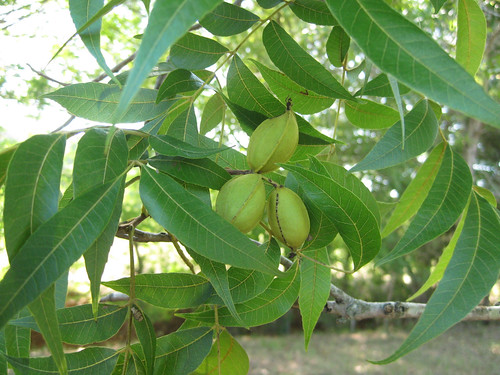
Fruit (Pecans): Large, brownish, football-shaped seeds (nuts), with lengths ranging from 1 to 2 inches, encased in a thick green husk. Husk usually splits open along four long seams to reveal a mottled, brown-shelled nut.
Seed Size: Pecans are typically 1 to 2 inches in length.
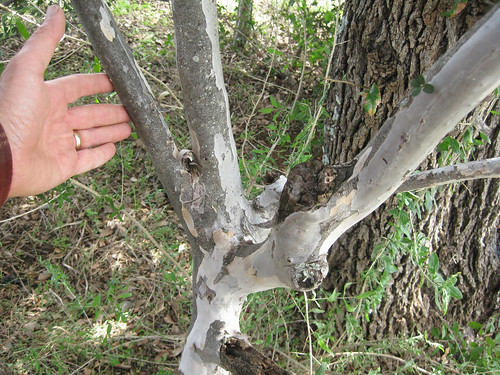
Bark: Gray to brown, with peeling, deep furrows and ridges as the tree matures.
Pecan nut
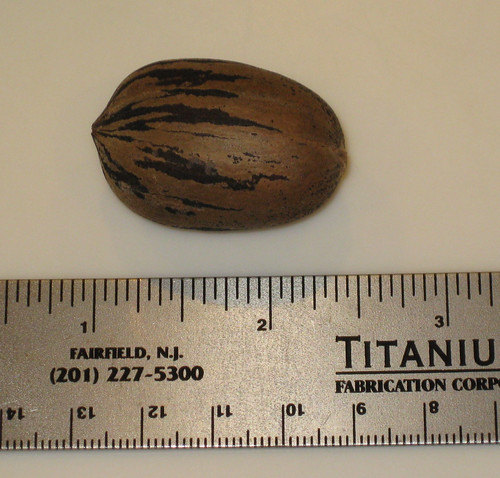
There's a large variety of pecan nuts, but they're all the same species (Carya illinoinensis).


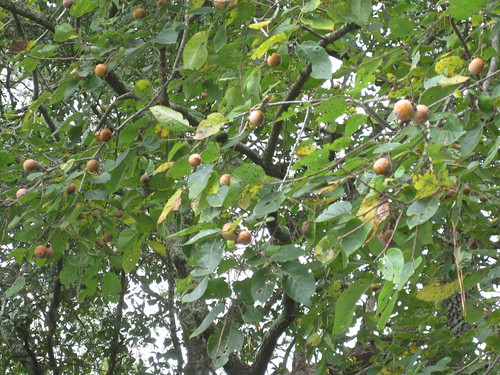
Ripe pecan nuts on tree. Note compound leaf with odd number of leaflets

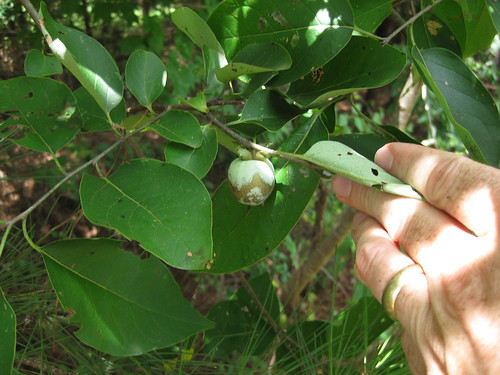
Almost-ripe pecans (picture taken early August in East Texas).
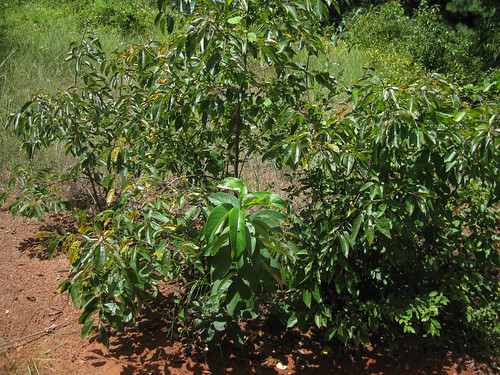
Pecan tree.
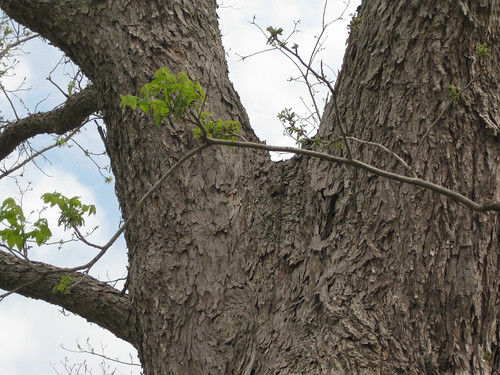
Close-up of pecan's scaly, peeling bark.

Pecan flowers (catkins) in spring.

Pecan twig in winter. Note the scaled buds, with a larger terminal bud. Leaf scars are seen under each bud.

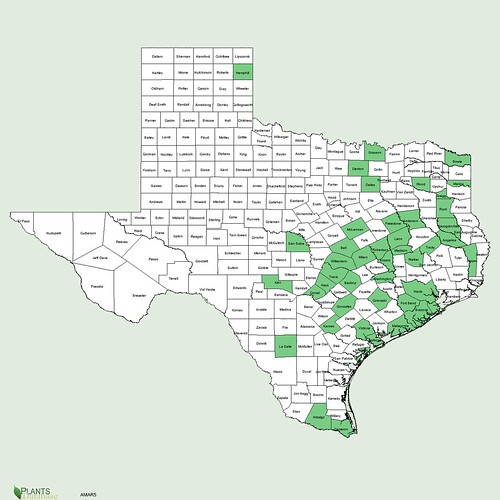
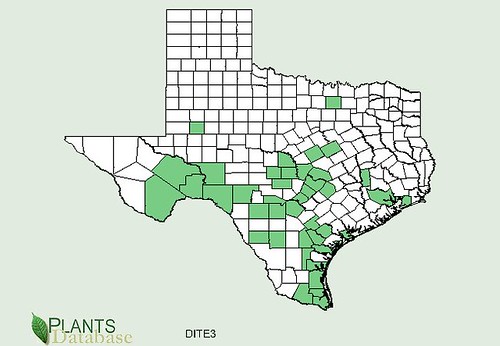
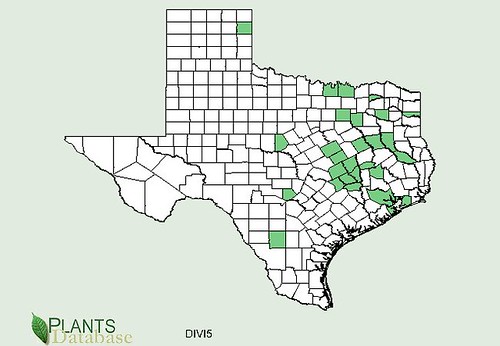
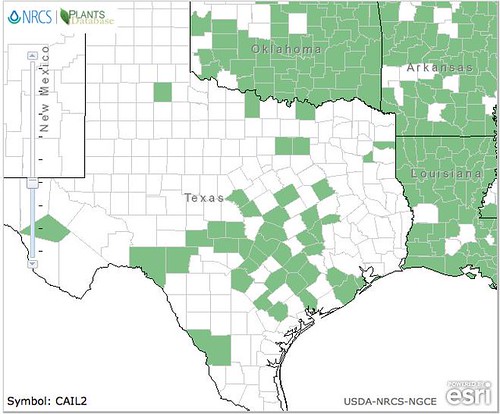
Texas distribution, attributed to U. S. Department of Agriculture. The marked counties are guidelines only. Plants may appear in other counties, especially if used in landscaping.
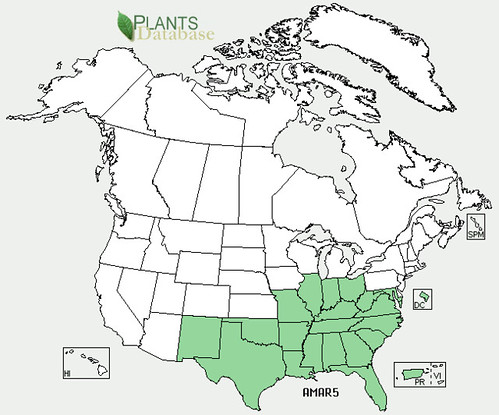
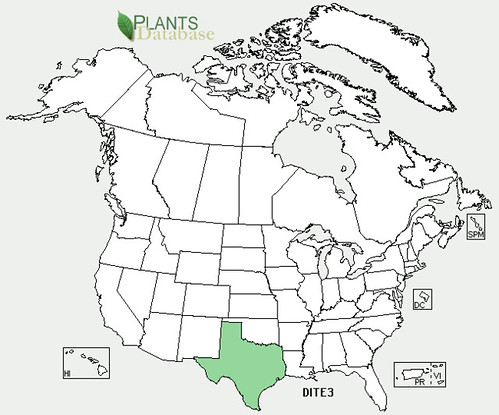
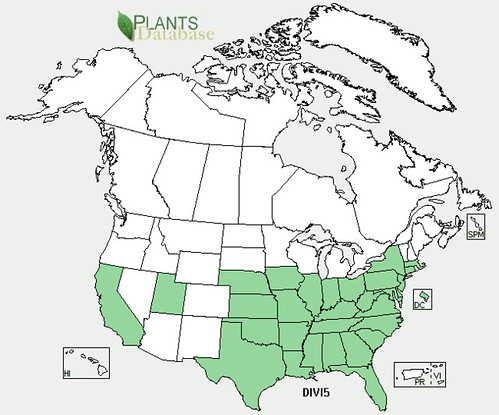
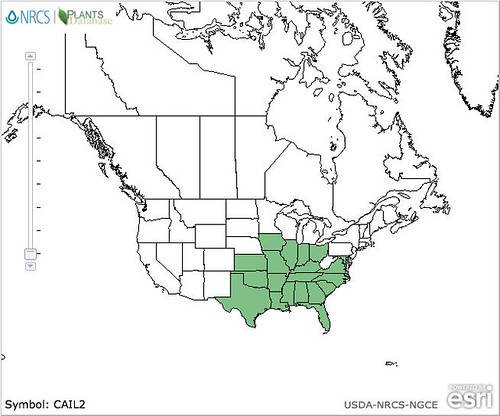
North American distribution, attributed to U. S. Department of Agriculture.
What truly needs to be said about pecans in Texas?
Best. Wild. Food. Ever!
North American distribution, attributed to U. S. Department of Agriculture.
What truly needs to be said about pecans in Texas?
Best. Wild. Food. Ever!
The nuts may be ripe starting in October and continue to be useful into December depending on where you are. They can be shaken from the tree or dropped ones can just gathered off the ground. The other husk is easily removed, especially after it's dried, turned brown, and has begun splitting open along the husk's seams. Cracking the nut's hard shell takes more effort. One can crush them open with your bare hands if strong enough, with the trick being hold three in the hand doing the crushing. Two of the nuts will work as a "hammer and anvil" to crack open the third. A standard pliers-style nutcracker works, but a dedicated device like below is better and available through Amazon. If you use the link I've provided I'll earn a helpful sales commission.

Once cracked, the nuts can be eaten raw, roasted, or added to any number of recipes. They are very nutritious for their light weight, which is why NASA picked them to be the astronauts's snack food, starting with Apollo 13 and continuing through Apollo 16!
Along with the nuts, pecan bark has a special use - it can be turned into a delicious syrup! One collects and cleans a bunch of the shaggy, loose strips of bark, roasts them in an oven, boils them in water, strains out the bark, adds sugar to the liquid, then boils it down. I've written up the complete directions over on my Substack account here: Roasted Pecan Bark Syrup