Rose of Sharon

Scientific Name(s): Hibiscus syriacus
Abundance: common
What: flower buds, flowers, tender seed pods, seeds
How: flowers - raw; flower buds & young seed pods - raw or cooked like okra; seeds - roasted for coffee substitute
Where: landscaping - full sun, well drained soil, neutral pH
When: summer
Nutritional Value: antioxidants, mucilage
Dangers: none

Medicinal Summary: mucilage in flowers binds to glucose in the GI tract, slowing/stopping its passage into the blood

Leaf Arrangement: Leaves are arranged alternately along the stems, with each leaf emerging singly at a node.

Leaf Shape: Leaves are broadly ovate to rhombic-ovate, typically 1 1/2" to 3 3/4" long and 1" to 3 1/2" wide, often displaying three distinct lobes.

Leaf Venation: Venation is palmate, with three primary veins radiating from the base of the leaf blade.

Leaf Margin: Margins are coarsely crenate to serrate, featuring rounded to sharp teeth along the edges.

Leaf Color: Leaves are medium to dark green on the upper surface and lighter green beneath, with a slightly glossy appearance.

Flower Structure: Flowers are solitary and axillary, measuring 2 1/2" to 4" in diameter, with five broad, overlapping petals forming a funnel shape.​ 

Flower Color: Petals range from white to pink, lavender, blue, or purple, often with a contrasting dark red or maroon throat. 

Fruit: The fruit is an ovoid capsule, approximately 3/4" to 1" long, composed of five valves that split open at maturity to release seeds. 

Seed: Seeds are kidney-shaped, about 3/16" to 1/4" long, with a smooth surface and a fringe of reddish-orange hairs along the margin. 

Bark: Bark is light gray to gray-brown, smooth on young stems, becoming slightly rougher and fissured with age.

Hairs: Young stems and leaf petioles are sparsely to moderately covered with minute stellate hairs, which diminish as the plant matures.

Height: This deciduous shrub typically grows to a height of 8' to 13' and a spread of 6' to 10', forming an upright, vase-shaped habit.

Rose of Sharon flower color is somewhat temperature dependent, range from blue when cooler and white when hotter.
Rose of Sharon

Rose of Sharon

Rose of Sharon

Unopened flower buds are a tasty treat,
Rose of Sharon

Rose of Sharon leaves are toothed and also often have three lobes.
Rose of Sharon

Rose of Sharon

Rose of Sharon

Rows of brown, 2mm-diameter seeds are found in the dried seed pods.
Rose of Sharon


Texas distribution, attributed to U. S. Department of Agriculture. The marked counties are guidelines only. Plants may appear in other counties, especially if used in landscaping.


North American distribution, attributed to U. S. Department of Agriculture.


Rose of Sharon are a non-native member of the mallow (hibiscus) family originally from East Asia, but its striking blossoms have made it a landscaping favorite across the Southeastern United States. This large shrub can reach up to 14' in height, but winter frosted often kill branch tips, preventing them growing that tall.

The showy flowers are loaded with an assortment of antioxidants including carotenoids anthocyanins, and flavonols. These compounds give the flower petals their color and their concentrations are dependent on soil pH and nutrients, but the red anthocyanins are sensitive to temperature, breaking down during the hotter times of day, allowing the yellowish/orange carotenoids or blue/purple flavonols to show. This causes flowers to change color throughout the day or across the short, 2-3 day, individual blooming time. While the life of a single flower passes quickly, the bush constantly produces new flowers for several months.

Technically, the leaves of Rose of Sharon are edible, but I find them somewhat tough. But the flowers, from young buds, through opening, to tender seed pods, are wonderful. All of these stages are fine raw, but the closed flower buds and young seed pods can also be pickled or fried just like okra pods. If left to reach full maturity, the seeds collected from the dried pod can be roasted, then ground up and used to stretch out one's supply of coffee. They don't contain any caffeine, but they do have something like a coffee flavor...especially if you haven't had coffee in a while. 


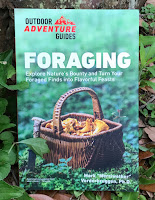
Buy my book! Outdoor Adventure Guides Foraging covers 70 of North America's tastiest and easy to find wild edibles shown with the same big pictures as here on the Foraging Texas website.


Saltwort

 Scientific Name(s): Batis maritima

Abundance: uncommon
What: all above-ground parts, including seeds
How: raw
Where: coastal beaches
When: spring, summer, fall, winter
Nutritional Value: salt, calories from seeds
Dangers: none

Medicinal Uses: seed oil is loaded with antioxidants as well as fatty acids that benefit the brain

Leaf Arrangement: The leaves are oppositely arranged along the stem, with each pair emerging at the same node on opposite sides. This opposite phyllotaxy contributes to the plant's compact, shrubby appearance.

Leaf Shape: The leaves are fleshy, linear to narrowly elliptic, and typically measure between 1.0 to 2.5 inches in length and 0.2 to 0.4 inches in width. Their succulent nature aids in water retention in saline environments.

Leaf Venation: The venation is pinnate but obscure due to the thick, succulent nature of the leaf tissues, with a single main vein running along the center.

Leaf Margin: The margins are entire and smooth, with no serrations or lobes, contributing to the streamlined shape of the leaves.

Leaf Color: The foliage is generally a medium to dark green but may take on a slightly grayish or bluish hue due to the waxy surface that reduces water loss.

Flower Structure: The flowers are small, inconspicuous, and bisexual, measuring approximately 0.1 to 0.2 inches in diameter. They are borne in clusters of 2 to 3 in the axils of the leaves and lack petals, consisting instead of green sepals surrounding the reproductive organs.

Flower Color: The flowers are greenish to whitish, blending in with the foliage and often going unnoticed unless closely inspected.

Fruit: The fruit is a small, fleshy, ovoid drupe measuring about 0.25 inches in length and 0.15 inches in width. It contains a single seed and matures to a dark purple or black color.

Seed: The seed is oblong and smooth, measuring approximately 0.15 inches long and 0.05 inches wide. It is enclosed within the drupe and typically brown in color.

Stem: The stems are woody at the base and become more herbaceous and green toward the tips. They are often thick and somewhat succulent, with a tendency to spread horizontally.

Hairs: The plant is glabrous, lacking hairs on leaves, stems, and reproductive structures. Its smooth surfaces are often coated with a waxy cuticle.

Height: Mature individuals typically grow to a height of 1.5 to 3 feet and can spread up to 6 feet wide, forming dense, sprawling mats in coastal environments.

Closeup of saltwort

Wider shot of saltwort

Cluster of saltworts across tidal mud


Texas distribution, attributed to U. S. Department of Agriculture. The marked counties are guidelines only. Plants may appear in other counties, especially if used in landscaping.


North American distribution, attributed to U. S. Department of Agriculture.


Saltwort appears to be the fatter, branching version of glasswort, though they don't share any ancestry other than both being eudicots. They do both thrive in high-salt, high-sun coastal beaches, playing a role in holding down the sand/mud/soil there.

All aerial parts of saltwort are edible. The thick, succulent stems and leaves have a nice crunch and a salty flavor. Eat them raw or add them to salads. I think they'd be great in scrambled eggs, tortillas wraps, or spring rolls, based on my use of purslane in these dishes. Older portions of saltwort might be a bit tough, give them a nibble to decide.

The seeds of saltwort contain a spectacular oil that is 93% unsaturated - making it the highest ever discovered. The flavor profile of this oil is similar to safflower oil. It does take a lot of the small seeds to produce oil so it isn't being done commercially, but kitchen table oil extraction can be accomplished with a Piteba Nut & Seed Oil Press.

Ringless Honey

Scientific Name(s): Armillaria abescens

Abundance: plentiful
What: mushroom body
How: sautéed, sauces
Where: dead wood, yards
When: spring, fall
Nutritional Value: carbohydrates, fiber, iron, potassium, vitamin D
Dangers: Must be cooked for at least 20 minute to avoid stomach distress. Also beware poisonous mimic sulfur tufts (Hypholoma fasciculare) and inedible luxury caps (Gymnopus luxurians)

Growth Form: Armillaria Tabescens typically grows in clusters of "toadstools" on dead wood, but can also be found as solitary specimens.

Cap Shape and Size: The cap is convex to flat, often with a slightly depressed center. It ranges in size from 1.5 to 4 inches in diameter. Young caps are a tan, similar to the stipes, but then become darker brownish.

Gills or Pores: It has closely spaced, white to cream gills that are attached to the stem. The gills are true, not false.

Stipe Characteristics: The stem is 2 to 4 inches long and about 0.5 to 1 inch thick. It is generally smoother than other Armillaria species, lacking a ring, and is colored off-white/light tan, similar to the younger caps. The stipes stay lighter colored as the caps darken.

Odor: This species does not have a distinct odor.

Bruising: Bruising is not a significant characteristic for this species.

Spore Color: The spore print is white.

Substrate and Habitat: Armillaria Tabescens is saprobic, commonly found on hardwoods, especially in the eastern United States. It is often seen on decaying wood and stumps.

Other Characteristics: Notable for its absence of a ring on the stipe (stem), which distinguishes it from other Armillaria species.


Cluster of ringless honey mushrooms at perfect stage to harvest.

Getting older, but still good to eat.

Caps turning brown. If the caps still look clean/not tattered they mushrooms are still edible.

Past the stage where I'd eat them.

Very old and definitely not edible.

Melted into goo. Mark this spot as new honey ringless mushrooms will return!


Cluster of mixed ages around dead tree.


Cross section showing true, decurrent (running down stipe) gills.


I consider ringless honey mushrooms to be the next level up from beginner mushrooms. While they are distinctive once you learn how to identify them, their variable appearance can lead to uncertainty when first trying to identify them. This is why I've included so many pictures of them!

 These pop up after heavy rains during the milder times of year - temperatures approximately between 40F and 80F, both in the woods and in yards. Any time we get 2"-10" inches of rain I know I'm going to be flooded with requests from Houston homeowners asking me to identify these mushrooms growing in their yard. These fungi only eat dead wood, but this includes large, dead roots just below the surface of the soil, making them look like they're popping up directly out of the ground. They can also survive on hardwood mulches.

Before eating, they must be cooked at least 20-30 minutes to breakdown their chitin and other mildly annoying compounds, which can cause stomach issues in people. Don't worry, cooking them this long doesn't destroy their flavor! To be sure they're cooked enough, I add them to sauces, stews, soups, and curries that'll be simmered al long time. They also go well in lasagna. 

Ringless honey mushrooms dehydrate well and will fill the room with the scent of honey during the process. Once dehydrated, they STILL must be cooked 20-30 minutes to destroy the mild toxins before eating.

TOXIC MIMIC - Sulfur Tufts (Hypholoma fasciculare) 
Growth Form: Hypholoma fasciculare typically grows in dense clusters.
Cap Shape and Size: The cap is convex to flat, 1.5 to 4 inches wide, with a yellow to greenish-yellow color and often has an orange-brown center. The cap surface is smooth and becomes sticky when wet.
Gills or Pores: The gills are attached and initially yellow, becoming greenish-yellow as the mushroom matures.
Stipe Characteristics: The stem is 1.5 to 4 inches long and 0.25 to 0.5 inches thick, cylindrical, and has a yellow color with a whitish base. It lacks a ring.
Odor: This mushroom has a noticeable pungent, radish-like odor.
Bruising: Bruising is not a prominent feature of Hypholoma fasciculare.
Spore Color: The spore print is purple-brown.
Substrate and Habitat: Found on wood, especially coniferous wood, in forests, parks, and gardens.


INEDIBLE MIMICS - Luxury Caps (Gymnopus luxurians)
Growth Form: Grows in scattered to densely clustered groups, often in large quantities on leaf litter or woody debris.
Cap Shape and Size: Convex to broadly convex when young, becoming nearly flat with age; surface smooth, dry, and radially fibrillose; color ranges from reddish-brown to orangish-brown, paler toward the margin; cap measures 1.2 to 3.5 inches across.
Gills or Pores: Gills are adnate to adnexed, sometimes slightly notched; they are true gills, close to crowded, and pale whitish to cream, often staining slightly darker with age.
Stipe Characteristics: Stipe is tough, fibrous, and often curved or twisted; color is similar to or darker than the cap, often with reddish or brownish tones; measures 1.5 to 4 inches long and 0.1 to 0.3 inches thick; surface is dry and sometimes slightly striate.
Odor: Mild or indistinct, sometimes slightly fungal.
Bruising: No significant color change when bruised or handled.
Spore Color: White.
Substrate and Habitat: Grows saprobically on leaf litter, woody debris, and decaying plant material in hardwood forests; commonly found in urban parks and landscaped areas with wood mulch.
Other Characteristics: Cap margin is often finely striate when moist; stipe base may be slightly fuzzy with white mycelium.

While not technically poisonous, Luxury Caps are said to taste like a mix of black pepper and urine. You have been warned. Also, Gymnopus luxurians do NOT have the psychoactive compounds found in their cousins, Gymnopilus junonius and Gymnopilus lutefolius.


Note how the gills of Luxury Caps stop just before the stipe, compared to how the gills of ringless honey mushrooms run down the stipe a bit.


How to learn edible wild plants.

Learning edible wild plants takes time and effort, there are very few shortcuts. However, the following tips will save you a lot of wasted effort. If you are serious about learning your local edible flora here what you want to do:

The Terrible Secret About Most Edible Plant Books
I get several e-mails a week asking "what one book is the best guide to edible wild plants?". The quick response is Peterson's Guide to Edible Wild Plants. It is probably the most comprehensive guide to edible plants in North America even though it mainly focuses on the northeast. It has color pictures, line drawings, and habitat info on hundreds of plants. But I have yet to meet anyone who successfully taught themselves more than 6-9 plants using this book. Few people can translate its line drawings and postage stamp-size pictures into real plants in the real world.

There's no such thing as a prefect, complete edible plant guide. Unless you are already a plant expert it's impossible to teach yourself all your local edible plant from a single book. It's too hard to have clear pictures of every plant in every stage of it's life. For that reason you really need to have multiple reference books. I have over thirty plant books that I use as guides. These aren't all just about wild edibles. They also include wildflower guides, weed guides, tree guides, botany textbooks, gardening books, forestry books, etc... Each book has different pictures and descriptions of the same plants. Once you get some books start flipping through them every chance you get. You want to train you eyes to see specific plants in all their stages among the Big Green Sea that surrounds you. You don't need to know the name or anything else about the plant at this point, just that you might have seen it in one of your books.

Update: when this article was first written I never expected I'd write a book. Well, I have and it avoids all the problems I described. Outdoor Adventure Guides - Foraging has multiple, big pictures of each plant (leaf, flower, stem, fruit, etc...) along with pictures of any poisonous mimics. It includes range maps to show you where in North America each plant is found, it even has a calendar showing you when the plant will appear depending on if you're in the south, central, or northern areas of this continent. Idiot's Guide: Foraging is available in both paperback and Kindle editions.

Cross Referencing
Once you've found a plant that might be edible it's time to ID it. Take a bunch of pictures of the plant's flowers, leaves (top and underside), stem, and overall appearance. Compare it to many pictures in your books, match the leaves, it's size and shape, and where it is usually found to similar plants in your books. At this point it's very helpful to understand plant descriptors (sepals, palmate, lobed, etc...) as it makes it easier to search through the books. Don't limit yourself to just using books to ID a plant. The internet is obviously another great resource for figuring out what the plant might be.

Take a Class
The best thing a plant newbie can do is take a class and I'm not just saying that because I teach the subject. A few hours with a good teacher will get you through the first, steepest part of the learning curves. By the end of the class you won't be adrift in the Big Green. You'll be able to pick out many plant all around you that are safe to eat (as well as know which tasty-looking plants are highly toxic!). Once you've been taught a bunch of edible plants, learning more becomes much easier as your "plant eye" will be much stronger. Then when you are on your own looking at a landscape you'll already see plants that you can/can not eat. You'll be left with just a few plants that you don't know, which is no longer overwhelming.

The other nice thing about taking a class is you'll get to see plants in different stages of their life. A particular plant may not be ready for harvest yet, but by seeing a young one you'll be able to go back and follow its growth. Or if it's past time you may be able to collect seeds to grow your own.

Growing Your Own
One of the best things you can do to learn edible wild plants is to grow your own. Seeds can be either collected in the wild (follow all appropriate laws!) or purchased via the internet. Observing the plant from seedling to maturity is a great way to train your eyes to see it out in the wild.

The Well-Trained Eye
The repeated scanning of your plant books, internet sites, and home-grown plants will have filled your subconscious with key plant-shapes to look for and you'll be surprised at how they suddenly jump out at you! Each time you go out pick a few new plants to research and after a year or three you'll have mastered the all local edibles. You know you are doing it right when you start dreaming about edible wild plants.


Buy my book! Outdoor Adventure Guides Foraging covers 70 of North America's tastiest and easy to find wild edibles shown with the same big pictures as here on the Foraging Texas website.

Making Sauerkraut and Other Fermented Foods.

Fermentation is one of the oldest forms of food preservation. While the word fermentation usually brings to mind the conversion of grains or fruit into beer and wine, it also covers microbial actions such as the conversion of starches and sugars into lactic acid. This lactic acid is what gives the tangy sour flavor to sauerkraut, kimchee, salami, sourdough, and yogurt. Vinegar is created by similar manner by bacteria which convert the alcohol into acetic acid. The lactic and acetic acids prevent other microbes from growing and spoiling the food.

These beneficial, acid-producing bacteria are found all around us naturally and under the right conditions they can easily be harvested. "Wild-type" bacteria don't always give great results so most people purchase bacteria which has already proven to be a good performer. The easiest way to buy them is in the form of yogurt with live culture. Strain the yogurt through cheesecloth and the resulting liquid is loaded with live lactic acid-producing bacteria. Lactic acid bacteria can also be bought in pill form in the vitamin section of most stores. Look for pills labeled Probiotic Acidophilus. To use, simply crush 1-2 of the pills and add the resultant power to your fermentation crock. These bacteria will reproduce and feed on some of the plant material to produce the lactic acid.

Probiotic Acidophilus containing 1 billion active cultures per tablet.
bacteria

Acetic acid producing bacteria can be found in certain unpasteurized vinegars such as Bragg's Apple Vinegar and some English malt vinegar. You can also purchase acetic acid bacteria "mother" from various places online.

The acid will attack most metal containers so ceramic, glass, or plastic vessels are used to hold the fermenting food. Traditionally large, straight-sided, wide-mouthed ceramic crocks were used and these still can be purchased from assorted online vendors. They are expensive though and usually outside the budget of most people just getting in to fermented foods. Luckily, circular ceramic crockpots and slow-cookers work just as well and are usually available from second-hand stores for under $10. Since the fermentation takes place at room temperature, the crockpot is left unplugged the whole time. The crockpots need to be circular in shape so a plate can be placed inside the crockpot to weigh down and completely submerge to food being fermented under the fermentation liquid. The acid-producing bacteria are "anaerobic" which means oxygen will prevent them from reproducing and must be excluded. Keeping the food submerged keeps the oxygen away, allowing the bacteria to do it's thing. Usually a weight is placed on the plate to keep everything submerged. I use a pitcher of water as the weight.

Sauerkraut: An Easy Fermented Food.
Sauerkraut (fermented cabbage) is one of the easiest fermented foods to make but it is also extremely nutritious. Sauerkraut is simply sliced cabbage with a little salt. More complex sauerkraut recipes call for additional things like apples, onions or spices such as dill and fennel. For your first time just stick with the basics.

Ingredients:
5 pounds of cabbage
3.5 tablespoons of sea salt (optional).
1-2 Probiotic Acidophus pills.

The salt isn't really necessary but adding it will help prevent "bad" bacteria from taking over while you are waiting for the acidophilus bacteria, which is unharmed by high salt concentrations, to grow. The acidophilus pills aren't need either as this sort of bacteria is already all around us and even on the cabbage leaves. I normally don't use these pills except when the weather is exceptionally cold resulting in slow-reproduction of the wild-type bacteria.

Step 1: Gather your stuff.
krautgear
Here we have the cabbage, crockpots, bowls, and sea salt. I use sea salt as it contains extra minerals that assist the bacteria in the fermentation process. Only one crockpot will be need to hold the cabbage.

Step 2: Slice the cabbage.
sliced
Peel off some of the outer cabbage leaves to get to the cleaner interior leaves. Also "core" the cabbage to remove the stem base. The stem base doesn't ferment well as it is large and solid which prevents the bacteria from getting into it. Some people puree the stem base and add it into the crock, but that just makes extra dishes. I'm lazy so I just feed the core to my worms.

Step 3: Salt the cabbage.
salted
Sprinkle some of the sea salt in the bottom of a large bowl, followed by some of the sliced cabbage. Continue to alternate layers of salt and cabbage. If you are adding crushed acidophilus pills do it at this same time, also in layers with the cabbage. Once the bowl is filled mix the salt and cabbage together with your hands while also crushing the cabbage to make it release its juices.

Step 4: Packing the cabbage in the crock.
bruising
Tightly pack the sliced cabbage into the crock. You want to press hard on it to drive out any air and also to squeeze more juice out. You need enough juice to completely cover all the cabbage. The salt will help draw out some of the water from the cabbage so don't worry if it at first is seems like there isn't enough juice. After a few hours a lot more juice will be freed from the cabbage so its rare that extra water needs to be added.

Step 5: Submerge the cabbage, part 1.
fermentingcovered
Place a plate on top of the cabbage to press it down under the water. I usually place a cup or an upside down bowl on top of the plate, followed by a cloth covering and then a pitcher filled with water on top of the cup or bowl. The pitcher increase the weight on the cabbge insuring it will stay submerged.

Step 5: Submerge the cabbage, part 2.
Fermenting1
Here you can see the cloth covering and the pitcher of water. The cloth keeps out any dust, spores, or flies that might want to contaminate the sauerkraut. The pitcher adds weight to keep stuff submerged. At this point depending on the room temperature it will take anywhere from four days to four weeks for the cabbage to reach the proper level of spicy, yummy fermentation. Check it every two to three days during this time to remove any "blooms". Blooms are simply white fuzzy/spiderwebby stuffy. It is non-toxic but kind of icky looking and can impart odd flavors to the fermented veggies if not removed.

A spider-webby bloom. Just remove it, the sauerkraut will be fine.
FermentBloom

Step 6: Eat!
LooksGood

Deciding when sauerkraut is "finished" is very subjective and only depends on your particular tastes. Visually it'll have a slightly translucent appearance but what really matters is the taste. If you like the way it tastes then it is finished. Pack the sauerkraut into covered glass or plastic jars and stick it in your fridge, making sure you included enough of the juice to keep the sauerkraut submerged. The batch shown being made for this article filled two quart jars.
The cold temperature of the fridge will cause bacteria growth/fermentation to slow almost to a standstill, no more lactic acid will be produced. The sauerkraut will then stay in this edible state for years.

In Mexico slices of carrots and peppers are treated this way. Kimchee is just Asian cabbages and other Asian vegetables mixed with spicy peppers and assorted seasonings and allowed to ferment into a fiery, tangy dish. Any plant can be fermented, whether it tastes good or not is up to you. I plan on making a kimchee-style dish using smartweed, dollarweed, spiderwort, chili pequins, and assorted other wild edibles. Hopefully it'll turn out fantastic...or at least edible.

Next up, a bunch of stuff mixed together.
fermenting
Update on the cauliflower/daikon radish/ginger/carrot/hot pepper mix: it's fantastic!!


Buy my book! Outdoor Adventure Guides Foraging covers 70 of North America's tastiest and easy to find wild edibles shown with the same big pictures as here on the Foraging Texas website.

Privacy & Amazon Paid Promotion Statement

I use third-party advertising companies to serve ads when you visit this website. These companies may use information (not including your name, address, email address, or telephone number) about your visits to this and other websites in order to provide advertisements about goods and services of interest to you. If you would like more information about this practice and to know your choices about not having this information used by these companies, click here.


I participate in the Amazon Services LLC Associates Program, an affiliate advertising program designed to provide a means for me to earn fees by linking to Amazon.com and affiliated sites. The prices you pay for the item isn't affected, my sales commission comes out of Amazon's pocket.

*These statements have not been evaluated by the Food and Drug Administration. This product is not intended to diagnose, treat, cure, or prevent any disease.